

Blog
Insights, analysis, and research from QuarterlyIQ.
Insights, analysis, and research from QuarterlyIQ.
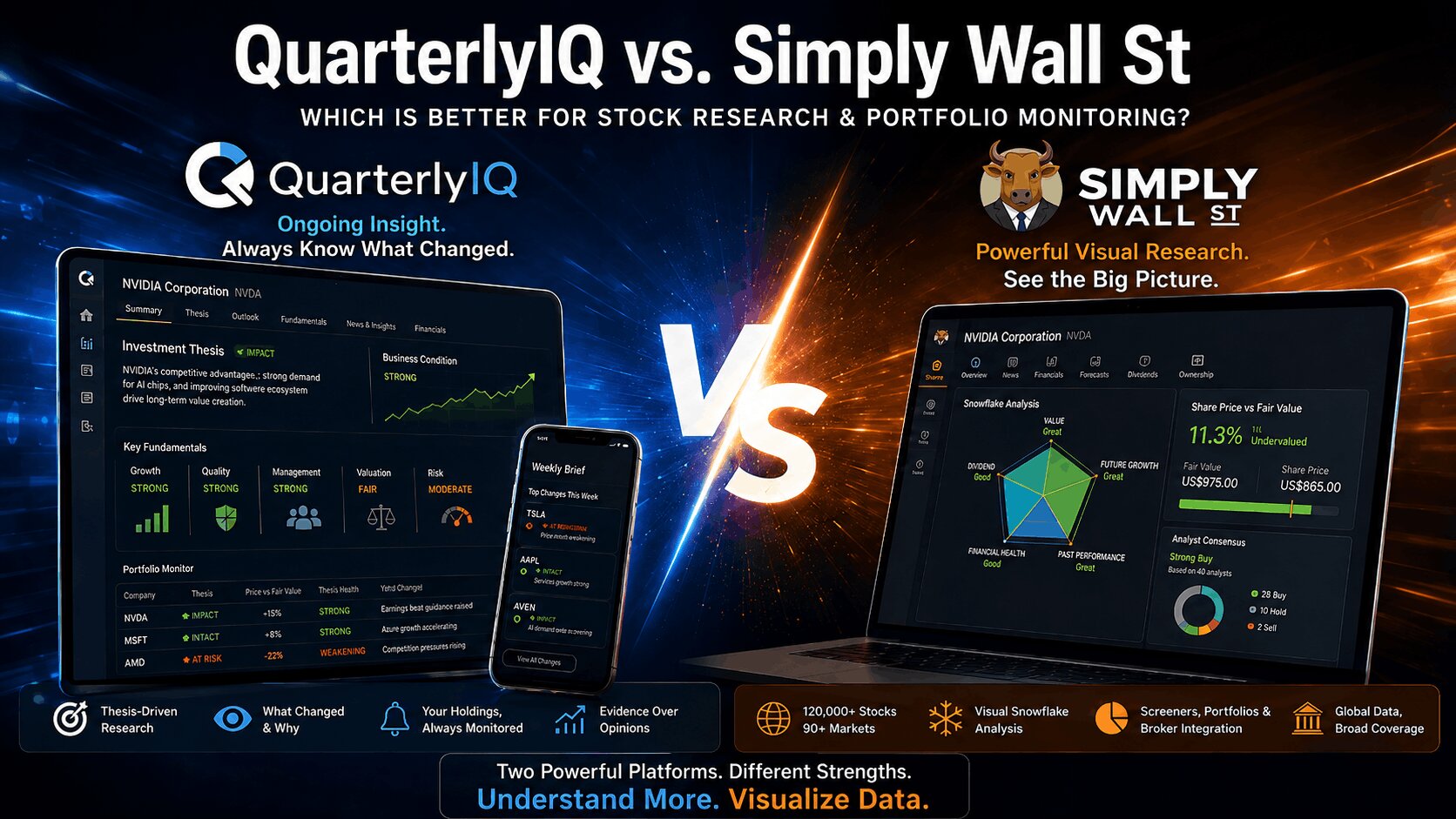
Simply Wall St excels at visual research, global coverage, screening, and portfolio performance tracking. QuarterlyIQ takes a different approach: connecting company fundamentals, valuation expectations, management execution, thesis health, upcoming evidence, and portfolio-level monitoring into one ongoing research process. This comparison looks at where each platform is strongest and why QuarterlyIQ may be the better fit for investors focused on what happens after they buy.
 Investment Strategy
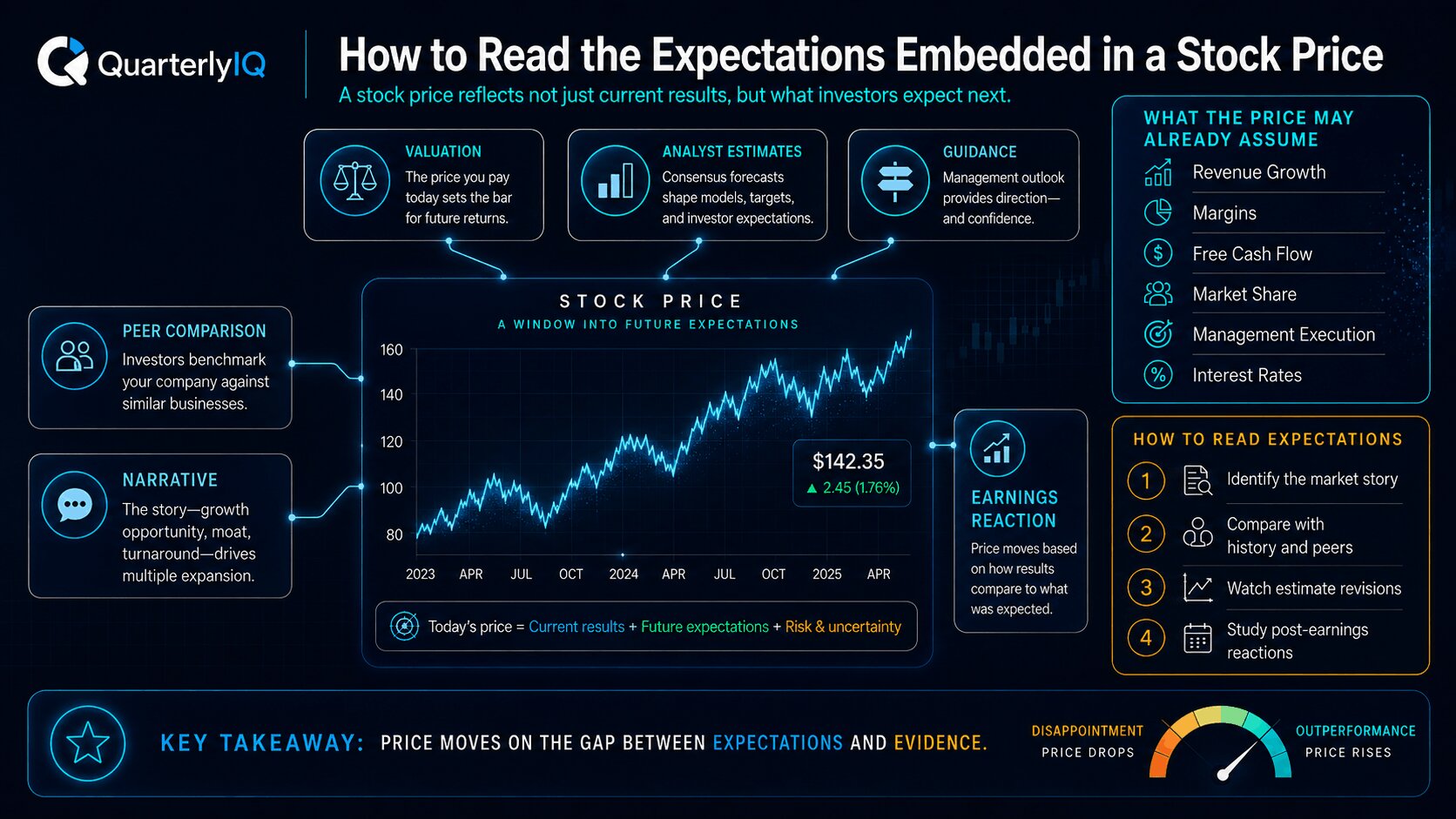
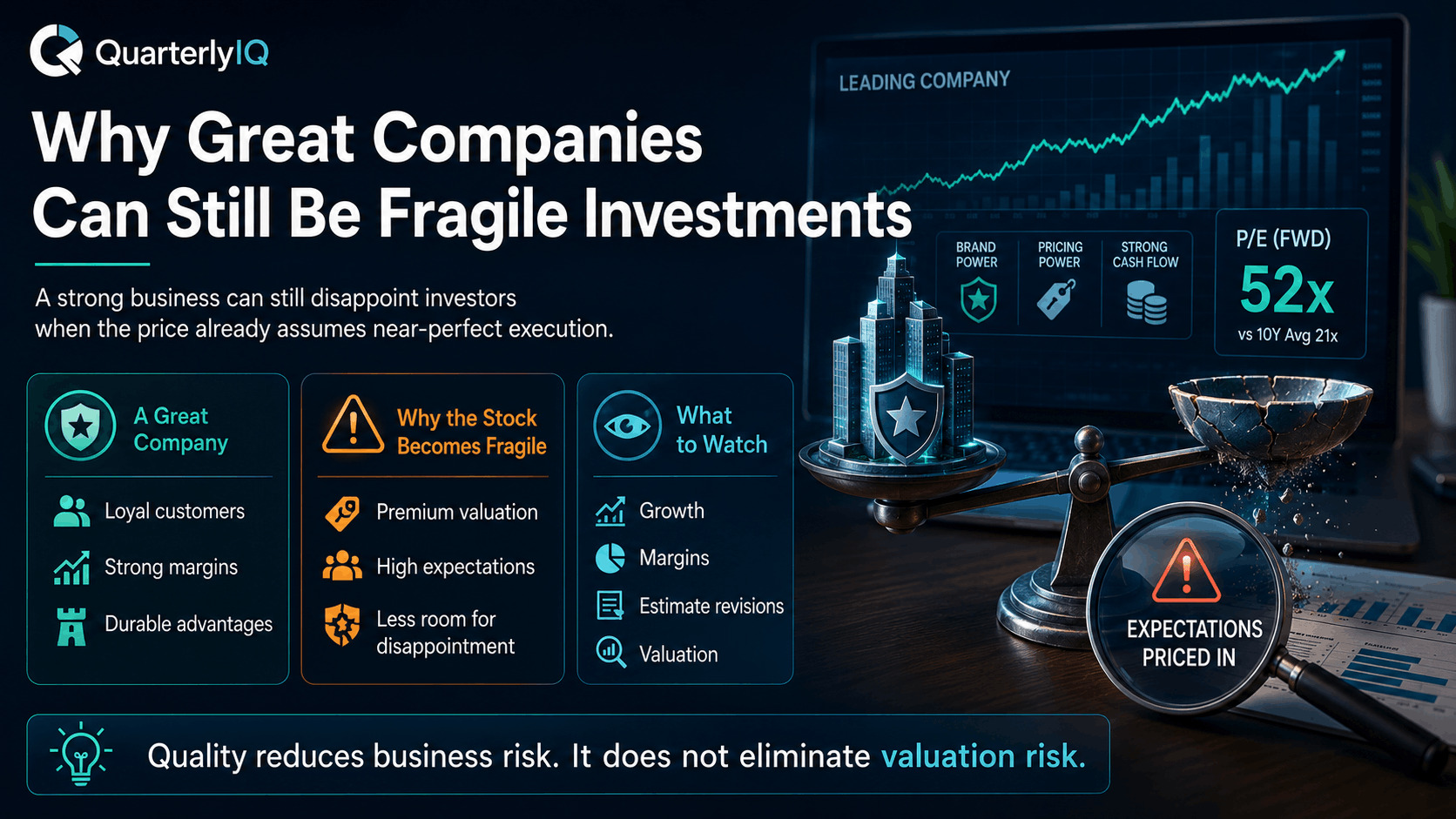
A stock price is not just a reflection of what a company is today. It also reflects what investors expect the company to become. Here is how to read those expectations more clearly.
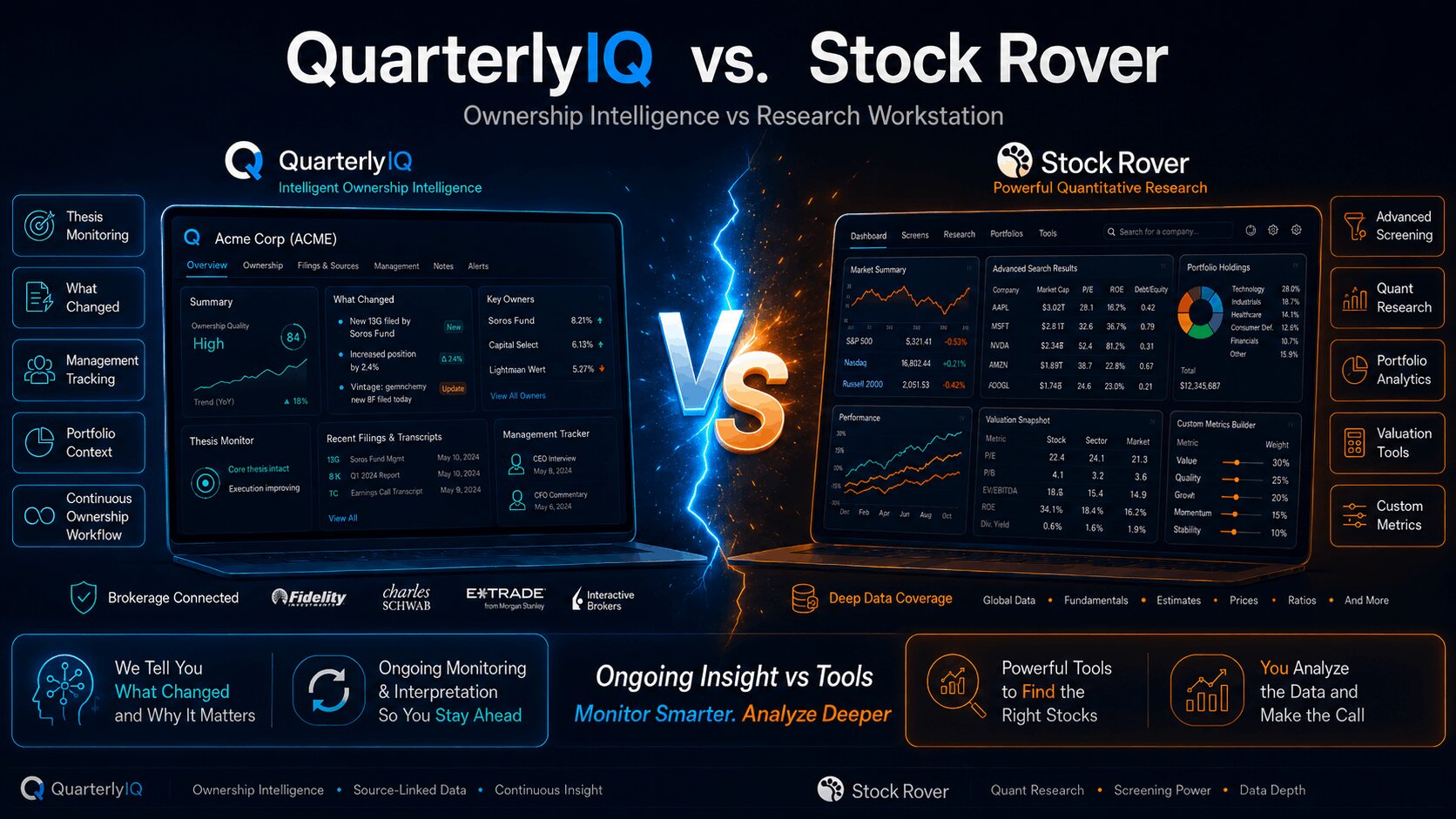
Stock Rover is one of the strongest quantitative investing platforms available, with deep screening, historical data, portfolio analytics, rebalancing, charting, and research tools. QuarterlyIQ takes a different approach by continuously interpreting company evidence, monitoring investment theses, tracking management execution, carrying research into the portfolio, and prioritizing what deserves attention. This comparison explains where each platform is strongest and why QuarterlyIQ may be the better fit for investors who want ongoing portfolio intelligence rather than a highly configurable analytical workstation.
 Investment Strategy
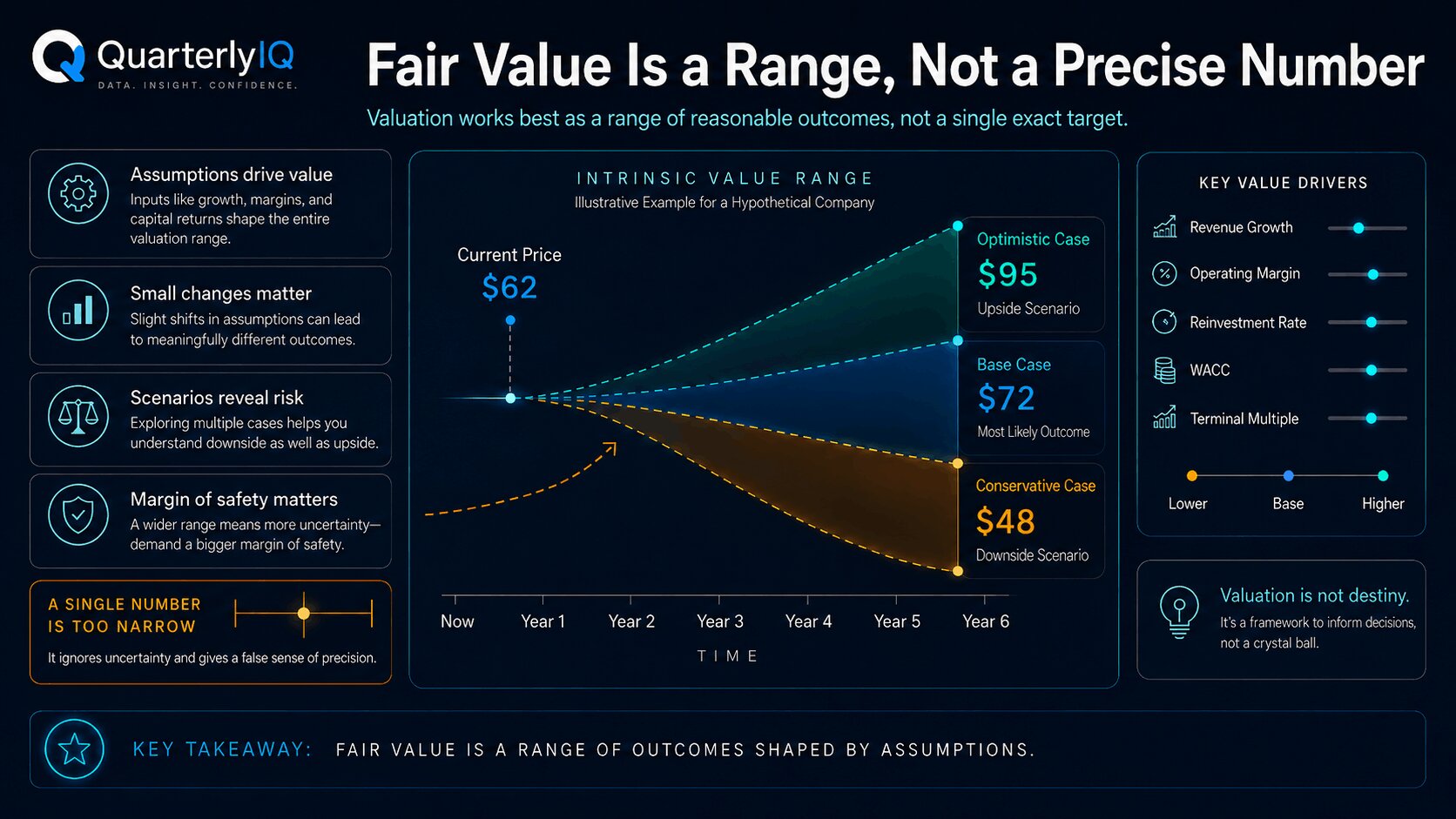
Investors often want one fair value estimate for a stock, but valuation is built on uncertain assumptions. A more useful approach is to think in ranges, scenarios, and evidence.
 Investment Strategy
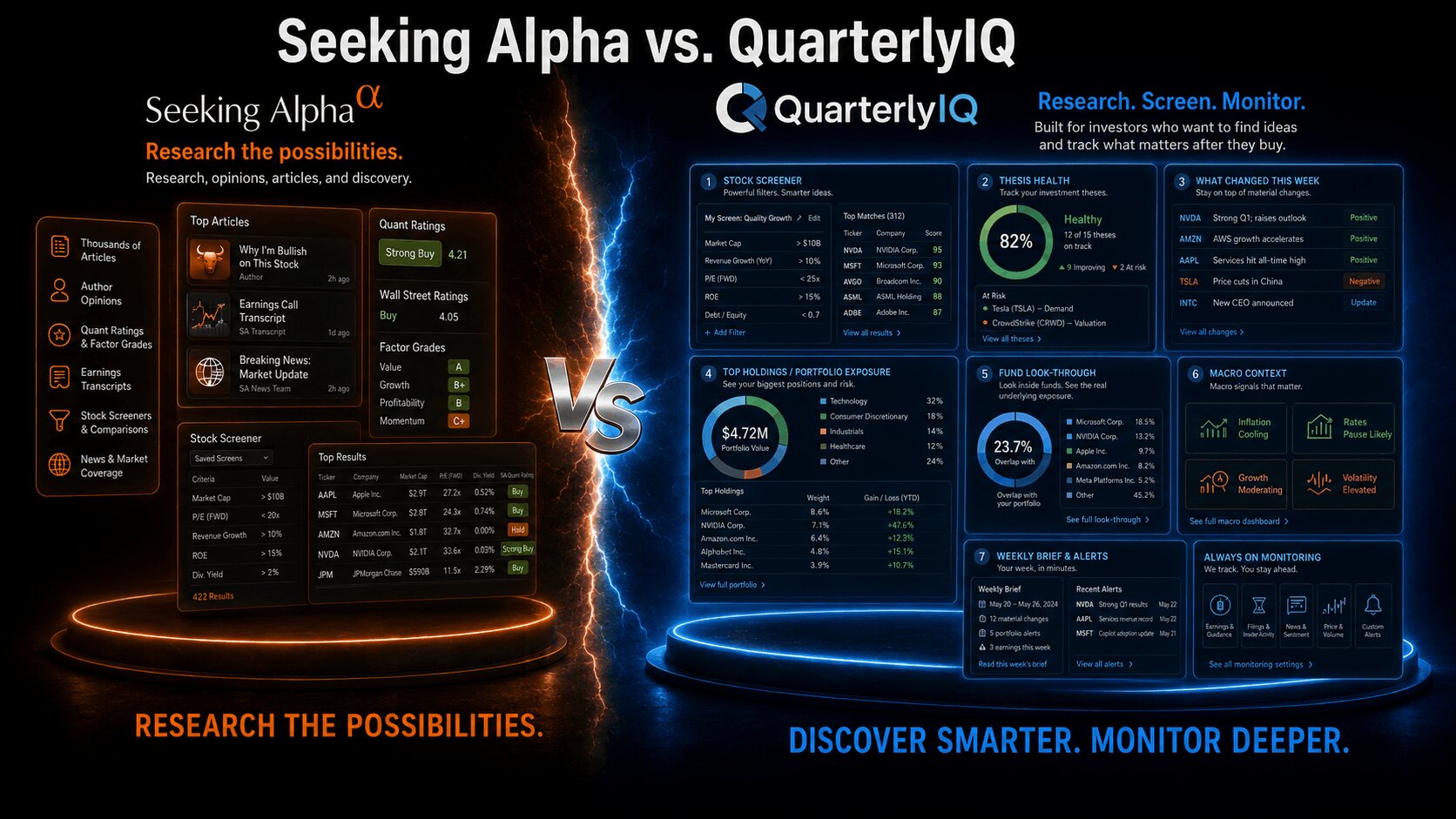
QuarterlyIQ and Seeking Alpha both help investors research stocks, connect portfolios, and follow market developments. The difference is what happens after an investment is purchased. Seeking Alpha is stronger for articles, transcripts, ratings, and idea discovery, while QuarterlyIQ connects company research, thesis monitoring, fund look-through, portfolio risk, macro context, Weekly Briefs, and alerts into one ongoing ownership workflow. For investors who want to understand what changed across the companies and funds they already own, QuarterlyIQ is the stronger overall choice.
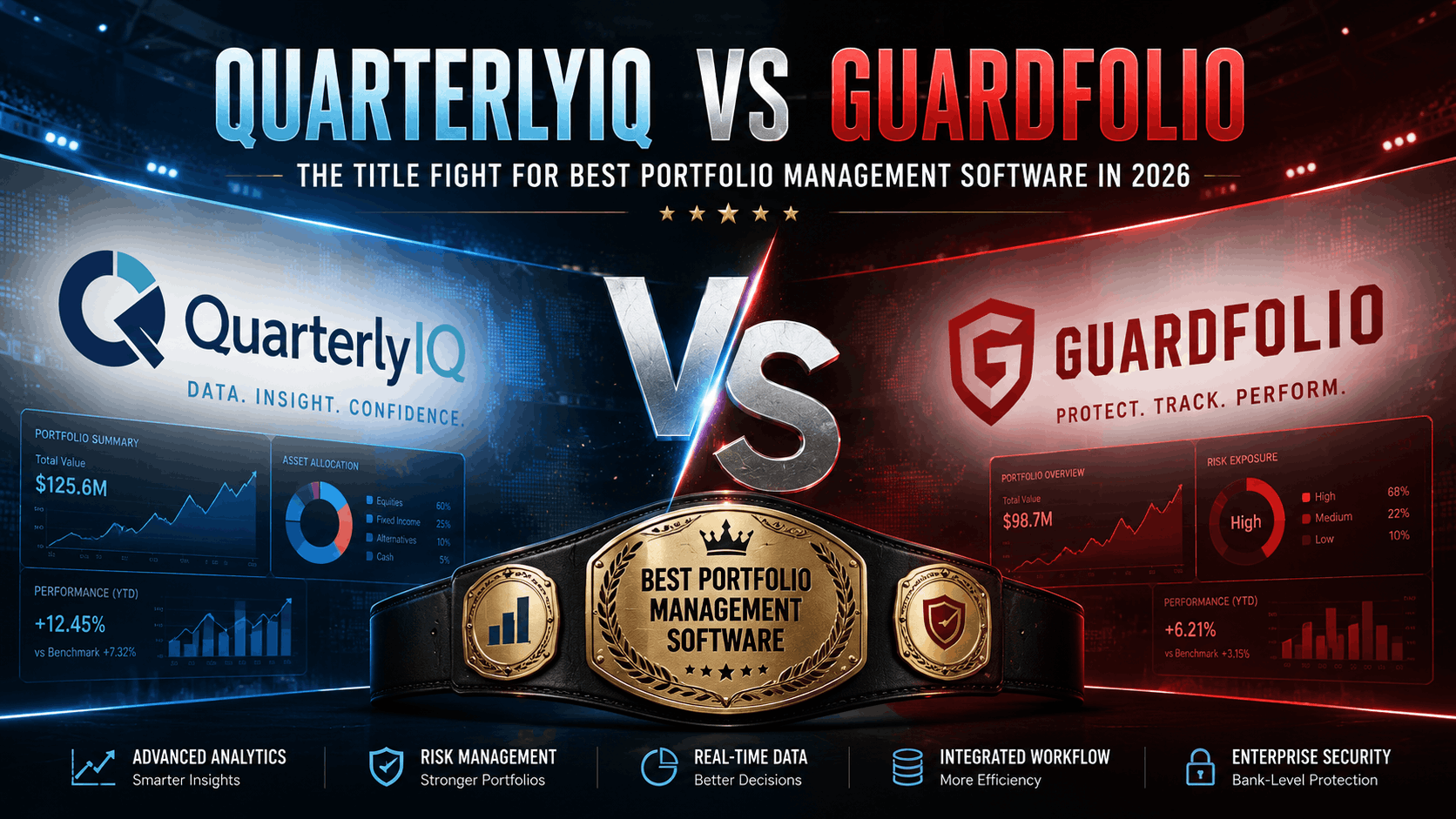
QuarterlyIQ and Guardfolio both help investors understand risk across multiple accounts, portfolios, and funds. But QuarterlyIQ goes further by combining brokerage aggregation, ETF look-through, portfolio analysis, daily company research, valuation, thesis monitoring, macro context, Weekly Briefs, and real-time alerts. For self-directed investors who want to know not only how their portfolio is structured, but whether the businesses inside it are still supporting the reasons they were purchased, QuarterlyIQ is the more complete solution.
 Investment Strategy
 Investment Strategy
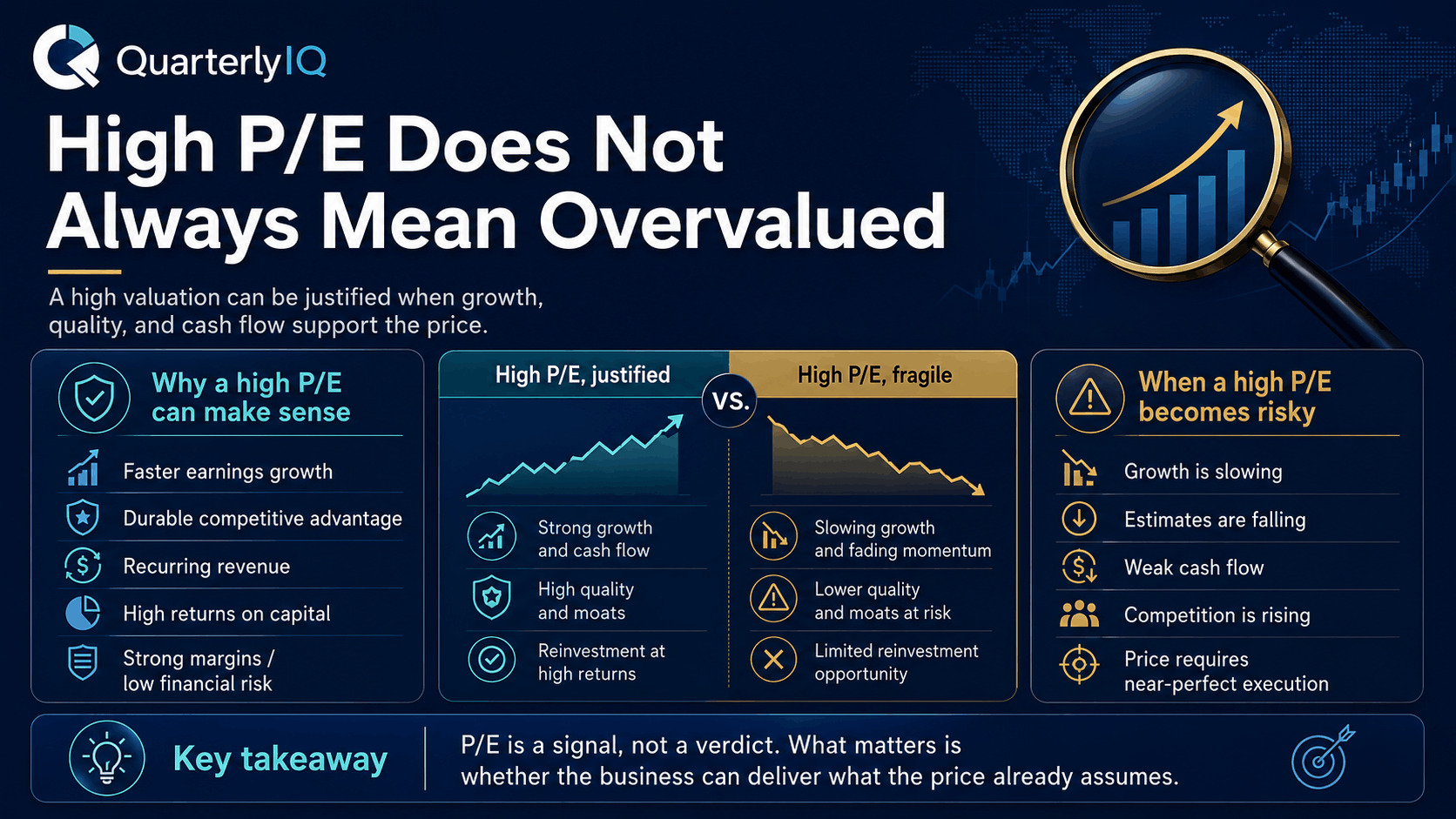
A high P/E ratio can signal optimism, quality, growth, accounting noise, or valuation risk. The key is understanding what the price already assumes and whether the business can realistically deliver.
 Investment Strategy
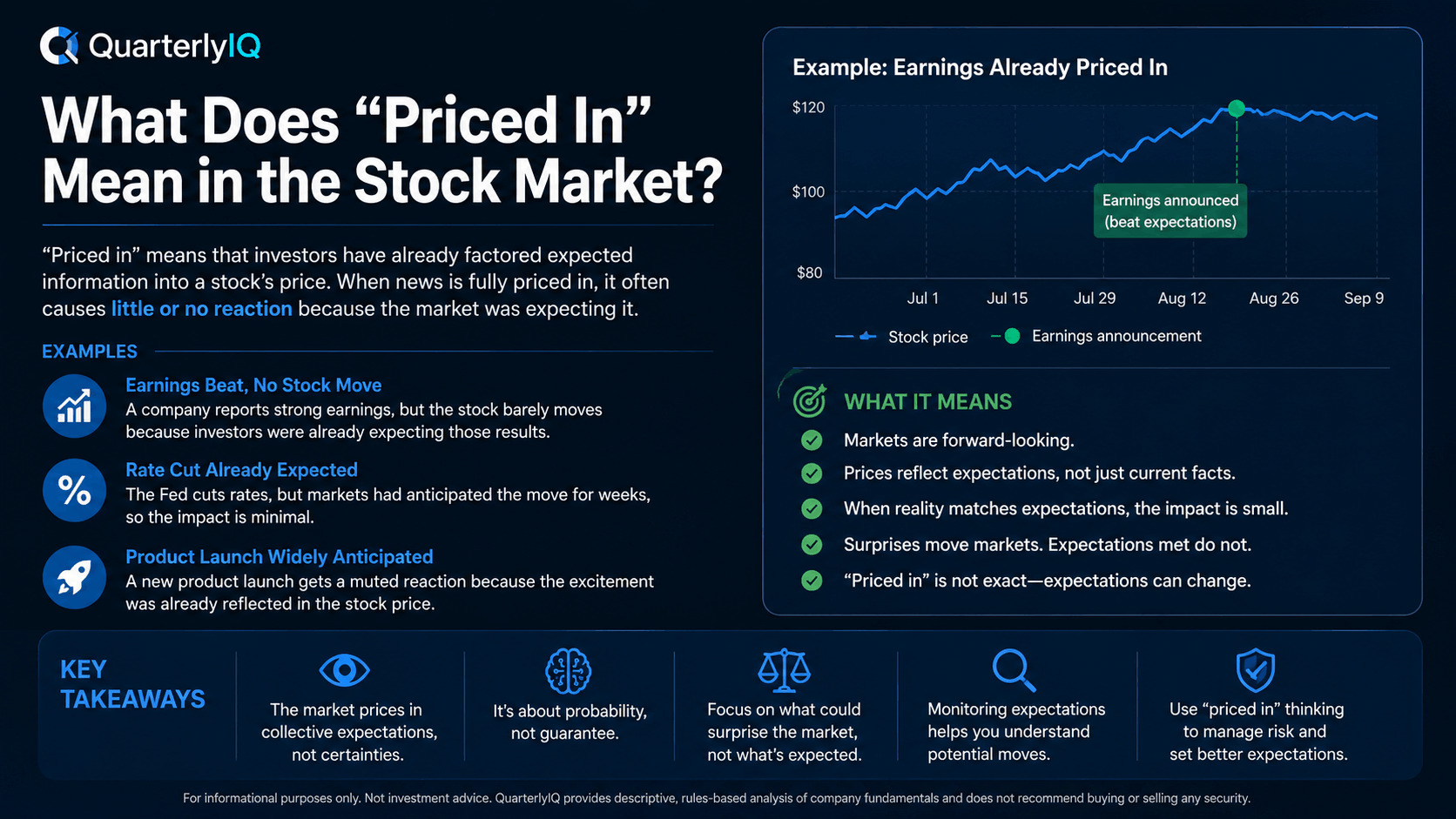
Stock prices react to the difference between what happens and what investors expected. Understanding what may already be priced in can help you interpret earnings, valuation, and market reactions more clearly.